What Nutrients Are Missing From Modern Diet Men Need
What nutrients are missing from modern diet men eat every day? The 4 organ-based nutrients your grandfather ate weekly, and why you feel tired at 3pm.


It's 3pm on a Tuesday. You ate. You slept, sort of. You had the coffee. And you're staring at an email you've read four times and can't make your brain answer.
Here's the tell: that wall shows up on the days you skip lunch, too. So it's not the sandwich. It's not laziness. Something else is going on.
If you've been asking what nutrients are missing from the modern diet men like us are living on, you're asking the right question. You feel that? That's the whole article.
The 3pm Wall Is Real. It's Also A Clue.
First thing you need to hear: the mid-afternoon crash is a documented, measured event. Researchers call it the "post-lunch dip" and it happens even when people don't eat lunch. It's tied to your circadian clock, not your willpower [1].
Read that again. It's real. You're not weak.
Second thing. The cellular machinery that actually makes your energy shifts as you age. In a study of adults 18 to 89, skeletal-muscle mitochondrial ATP output dropped about 8% per decade [2]. That doesn't mean you're done. It means the food, the sleep, and the training you get away with at 28 do not carry you at 51.
So the wall is real, and the engine is more sensitive to the fuel you put in it than it used to be. Fine. Now the question is: what fuel is missing?
Your Multivitamin Isn't The Answer, Because You're Not Missing "Vitamins"
I know. You already take the multivitamin. You've been taking it for years. And you still feel like this.
I opened my supplement drawer at 49 and counted eleven bottles. Eleven. I felt worse than I did at 39. That was the day I stopped asking "what should I add?" and started asking "what did I take away?"
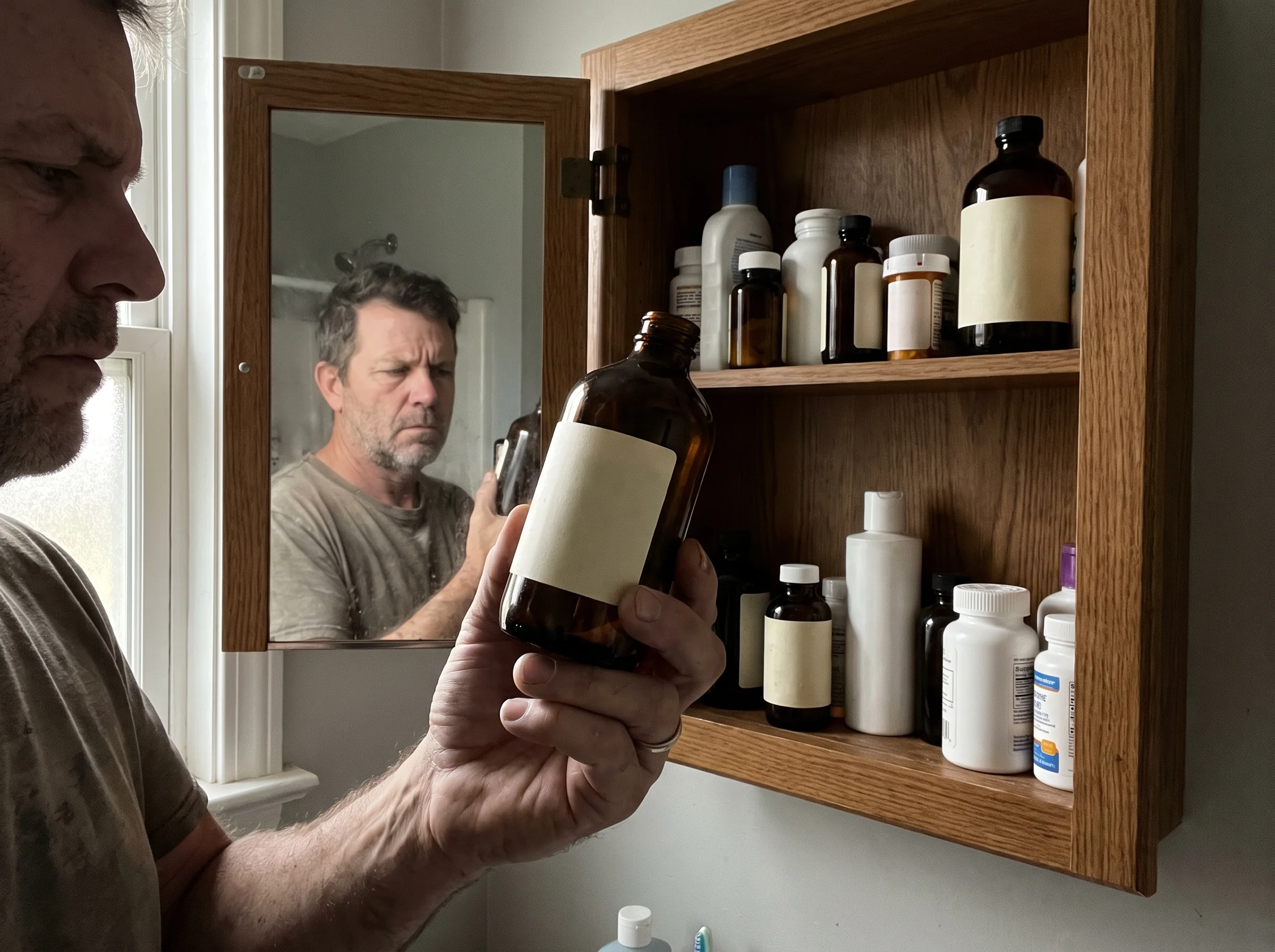
Here's the reframe. A multivitamin is a bucket of loose screws dumped on a construction site. Real food is the pre-assembled cabinet. Your gut evolved over a couple hundred thousand years to recognize food, not the packaging on aisle 12. Isolated synthetics are not the same event as nutrients arriving in the matrix your body was built around.
You're not missing "vitamins" in the abstract. You're missing a category of food.
The Food Group Your Grandfather Ate Every Week
Ask your grandfather what he ate as a kid. Liver and onions on Wednesday. Kidney pie. Heart in the stew because meat was expensive and you used the whole animal.
Then the 1950s hit. Industrial food. Cheap boneless chicken. Beef broken down and sold as muscle cuts on foam trays. Organs got rebranded as "peasant food" and quietly disappeared from the American plate. Within two generations, the most nutrient-dense stuff on the planet went in the trash.
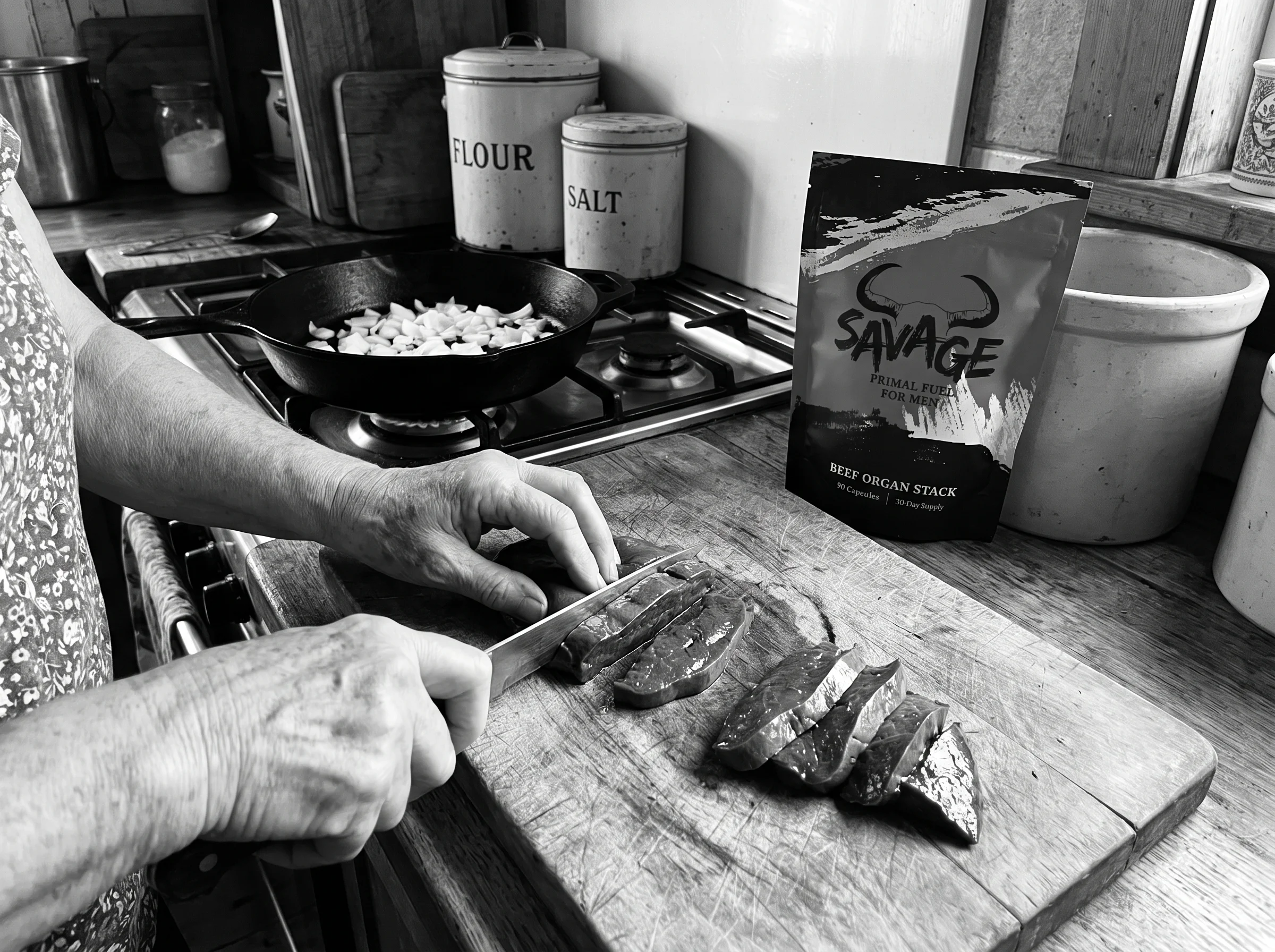
You eat steak and chicken and think you've got protein covered. You do. Muscle meat is great protein and iron. It just doesn't carry what organs carry.
Modern food-science analyses of raw US beef offal confirm liver, heart, and kidney each hold distinct, concentrated micronutrient loads that muscle cuts simply don't match [3][4]. Muscle meat is one book. Organs are the library your muscle meat forgot to check out.
Your grandfather checked it out weekly. You've had it overdue for 20 years.
The Four Nutrients Missing From The Modern Diet Men Eat Today
Not ten. Not twenty. The ones that actually matter, and the ones that trace right back to the food group you deleted.
1. Preformed Vitamin A
You eat carrots and sweet potatoes, feel virtuous, and assume you're covered.
Problem: plants give you beta-carotene, which your body has to convert to retinol. That conversion is inefficient and varies wildly between people, from roughly 4:1 to 28:1 by weight [5]. It's a lottery, and some men are drawing bad tickets.
Liver skips the lottery. It carries preformed retinol directly, and vitamin A is involved in immune function, cellular communication, and male reproduction [6]. Your grandfather didn't know any of that. He just ate the liver.
2. Choline
The most neglected nutrient in the American diet, and men are especially exposed.
Under severe choline restriction, 77% of men developed reversible signs of liver or muscle dysfunction [7]. That's how you know it's essential, not optional. Higher choline intake also tracks with better memory markers in observational work [8].
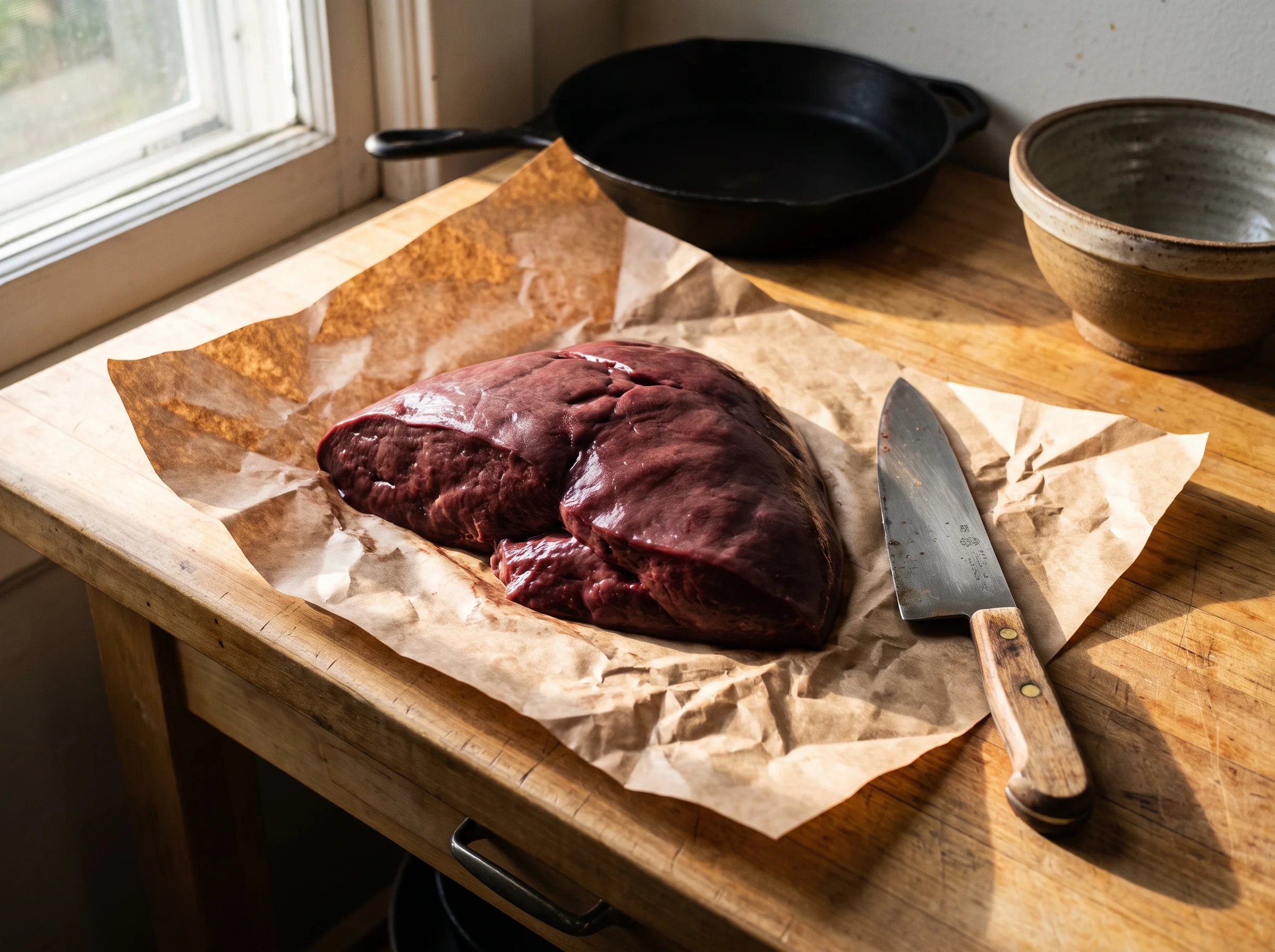
Beef liver is one of the richest whole-food sources, around 330 mg per 100 g [9]. Most men are nowhere near adequate intake because they don't eat eggs at breakfast and they don't eat liver, period.
3. CoQ10 (via heart)
CoQ10 sits inside your mitochondria and helps convert food into ATP, the actual currency your body spends on energy. Levels decline in some tissues with age [10].
Beef heart is one of the highest natural food sources. Here's the kicker: standard frying cuts recoverable CoQ10 to about 69% of raw [11]. So even the old-schoolers cooking heart on the stove lose a chunk to the pan.
Think of CoQ10 like the charger for the batteries in every cell. Your heart tissue is packed with it because your heart never gets to rest. When the charger wears out, everything runs at half power. That's not "getting old," that's a supply problem.
4. Heme Iron In An Animal-Food Matrix (bonus)
Iron in animal foods absorbs more consistently than iron in plants, roughly 14 to 18% versus 5 to 12% [12]. And in adults who are iron-deficient but not yet anemic, iron reduced self-reported fatigue [13].
Caveat, and I mean it: if you have high ferritin or hemochromatosis, iron-carrying foods are not for you without a clinician's OK. This isn't a "more is better" nutrient. Know your status.
Why This Isn't Fixed By Another Protein Shake
Two more truths before we get practical.
Muscle in midlife is built by training plus total protein, and the plateau lands near 1.6 g/kg/day [14]. Expert consensus for older adults sits around 1.0 to 1.2 g/kg/day, more if you're active [15]. Organ capsules don't replace that. They're micronutrient support running alongside your protein and your lifts, not instead of them.
So here's the Parent beat: nothing you've tried has worked because you've been treating a food-group deletion with a supplement aisle. Different problem, different fix.
The Honest Problem With The Obvious Solution
"Just eat liver twice a week." Right. Have you eaten liver?
I tried. Cooked it three ways. Threw two of them out. My wife made me finish the third one on the back porch. Liver is nature's multivitamin AND it tastes like it lost a fight. Heart is chewy. Kidney smells like a locker room in August.
No modern man with a job, kids, and a wife who has opinions about what's in the pan is cooking organ meat weekly. That's the honest gap.
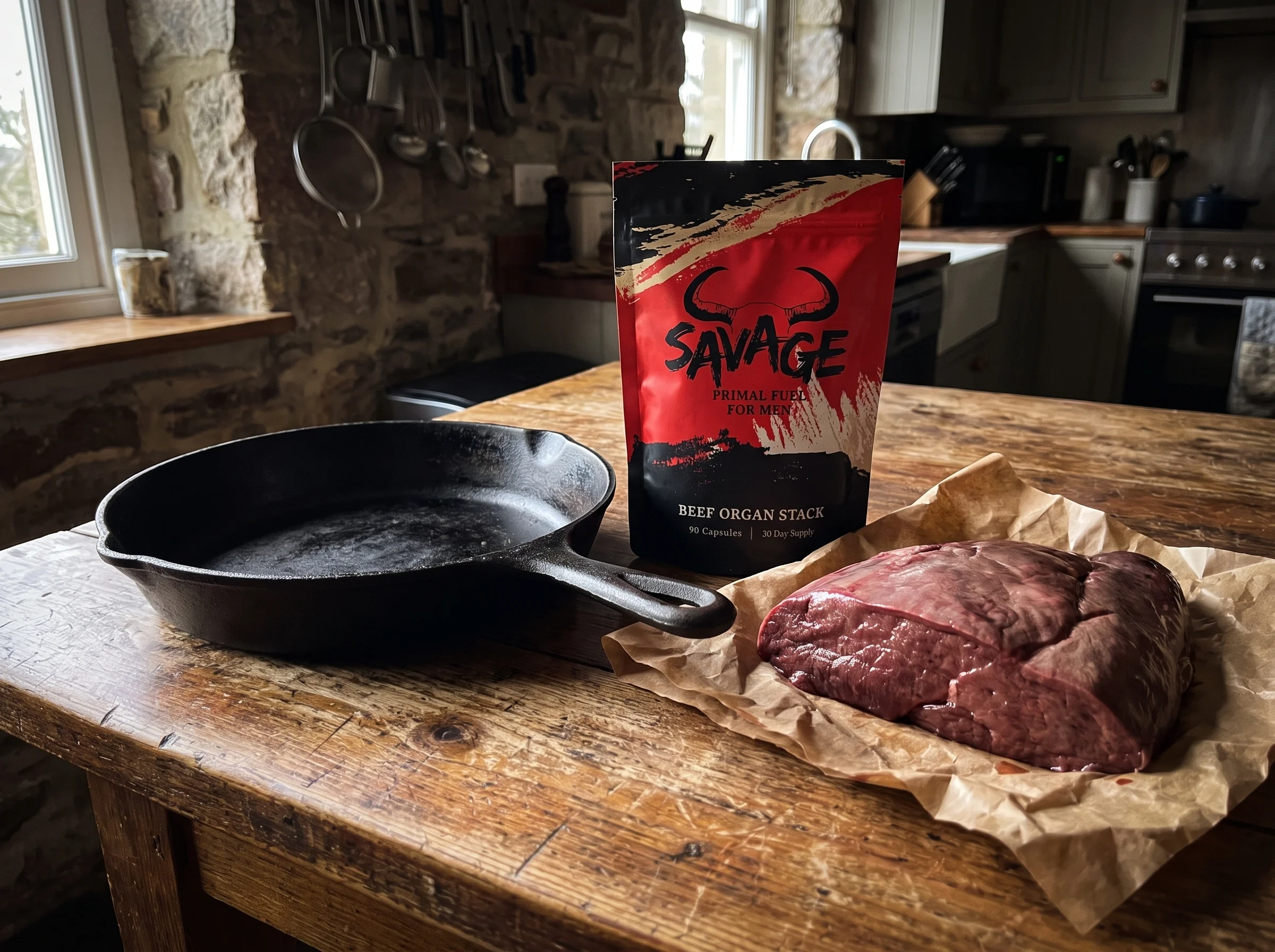
That's why I take the Savage Beef Organ Stack. Three capsules with food, all six organs (liver, heart, kidney, testicle, prostate, pituitary), freeze-dried raw so you avoid the sustained cooking heat that torches CoQ10 and folate in the pan [11][16]. No gag reflex. No back porch.
I didn't formulate it. I found it, it changed me, and now the men I coach use it too. That's the whole story.
What Actually Moves The Needle (In Order)
Three points. Real ones.
1. Sleep. No nutrient beats sleep. Sleep-deprived adults show higher baseline cortisol and a bigger stress response [17]. Fix this first or nothing else lands.
2. Lift heavy. Resistance training plus adequate protein is the closest thing to a real lever a 50-year-old has. Testosterone is acutely elevated after heavy resistance work in men [18]. Not a T-booster claim, just physiology doing what physiology does when you ask it to.
3. Feed the body food it recognizes. Put the deleted food group back on the plate. Cook liver if you can hack it. If you can't, that's what the stack is for.
The Aha
You're not broken. You're not "just aging."
You deleted a food group your body was built around and you've been paying the tax on it for 20 years. Your grandfather ate the whole animal because he had no other choice. You have a choice now, and you can make it easier than he did.
Energy that lasts past 3pm. A workout that feels like a lift instead of a chore. A brain that finishes the email the first time. That's not a fantasy. That's what happens when the raw materials show up again.
This isn't another T-booster. It isn't TRT. It's the food group you deleted, put back on the plate in a form you'll actually take.
If you want the full map on why your labs look "normal" while you feel like hell, start with the pillar on nutritional deficiencies in men. If you're ready to put the food group back today, you know where to find the stack.
Either way, stop asking what to add. Ask what you took away.
References
[1] Monk TH. The Post-Lunch Dip in Performance. Clin Sports Med. 2005;24(2):e15-e23. https://pubmed.ncbi.nlm.nih.gov/15892914/
[2] Short KR, et al. Decline in Skeletal Muscle Mitochondrial Function with Aging in Humans. PNAS. 2005;102(15):5618-5623. https://pubmed.ncbi.nlm.nih.gov/15800038/
[3] Fuerniss HF, et al. Nutrient Analysis of Raw United States Beef Offal Items. Nutrients. 2024;16(18):3104. https://pubmed.ncbi.nlm.nih.gov/39339704/
[4] USDA FoodData Central SR Legacy, beef liver / heart / kidney. https://fdc.nal.usda.gov/food-details/169451/nutrients
[5] Tang G. Bioconversion of Dietary Provitamin A Carotenoids to Vitamin A in Humans. Am J Clin Nutr. 2010;91(5):1468S-1473S. https://pubmed.ncbi.nlm.nih.gov/20200262/
[6] NIH Office of Dietary Supplements. Vitamin A and Carotenoids Fact Sheet for Health Professionals. https://ods.od.nih.gov/factsheets/VitaminA-HealthProfessional/
[7] Fischer LM, et al. Sex and Menopausal Status Influence Human Dietary Requirements for the Nutrient Choline. Am J Clin Nutr. 2007;85(5):1275-1285. https://pubmed.ncbi.nlm.nih.gov/17490963/
[8] Poly C, et al. The Relation of Dietary Choline to Cognitive Performance and White-Matter Hyperintensity in the Framingham Offspring Cohort. Am J Clin Nutr. 2011;94(6):1584-1591. https://pubmed.ncbi.nlm.nih.gov/22071706/
[9] USDA Database for the Choline Content of Common Foods, Release 2 (2008). https://www.ars.usda.gov/ARSUserFiles/80400525/data/choline/choln02.pdf
[10] Diaz-Casado ME, et al. The Paradox of Coenzyme Q10 in Aging. Nutrients. 2019;11(9):2221. https://pmc.ncbi.nlm.nih.gov/articles/PMC6770889/
[11] Ercan P, El SN. Changes in Content of Coenzyme Q10 in Beef Muscle, Beef Liver and Beef Heart with Cooking and In Vitro Digestion. J Food Compost Anal. 2011;24(8):1136-1140. https://www.sciencedirect.com/science/article/pii/S0889157511001517
[12] Hurrell R, Egli I. Iron Bioavailability and Dietary Reference Values. Am J Clin Nutr. 2010;91(5):1461S-1467S. https://pubmed.ncbi.nlm.nih.gov/20200263/
[13] Houston BL, et al. Efficacy of Iron Supplementation on Fatigue and Physical Capacity in Non-Anaemic Iron-Deficient Adults. BMJ Open. 2018;8:e019240. https://pubmed.ncbi.nlm.nih.gov/29626044/
[14] Morton RW, et al. A Systematic Review, Meta-Analysis and Meta-Regression of the Effect of Protein Supplementation on Resistance Training-Induced Gains in Muscle Mass and Strength. Br J Sports Med. 2018;52(6):376-384. https://pubmed.ncbi.nlm.nih.gov/28698222/
[15] Bauer J, et al. Evidence-Based Recommendations for Optimal Dietary Protein Intake in Older People (PROT-AGE Study Group). J Am Med Dir Assoc. 2013;14(8):542-559. https://pubmed.ncbi.nlm.nih.gov/23867520/
[16] Aramouni FM, Godber JS. Folate Losses in Beef Liver Due to Cooking and Frozen Storage. J Food Qual. 1991;14(5):357-365. https://onlinelibrary.wiley.com/doi/10.1111/j.1745-4557.1991.tb00077.x
[17] Minkel J, et al. Sleep Deprivation Potentiates HPA Axis Stress Reactivity in Healthy Adults. Health Psychol. 2014;33(11):1430-1434. https://pubmed.ncbi.nlm.nih.gov/24818608/
[18] Vingren JL, et al. Testosterone Physiology in Resistance Exercise and Training. Sports Med. 2010;40(12):1037-1053. https://link.springer.com/article/10.2165/11536910-000000000-00000